
Before, during and after exercise
Think ICE - insulin, carbohydrate, exercise - before you start. Then follow the three steps: before, during and after. This is the page to come back to every time.
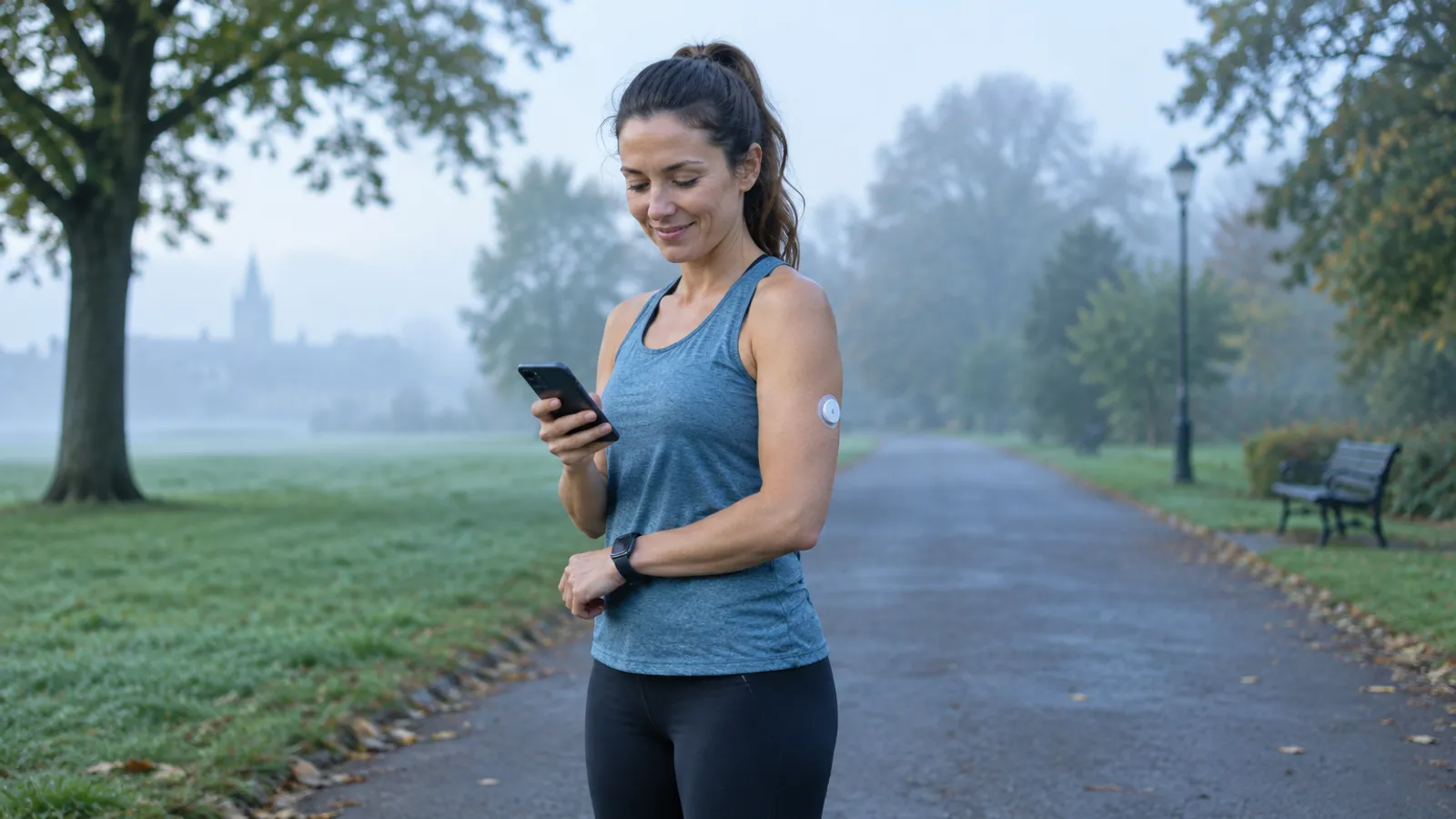
The three-letter check
Think ICE: insulin, carbohydrate, exercise
These are the three things you can change. Ask yourself about each one before you start, and you will avoid most problems before they happen.
Insulin
How much insulin is still working?
Insulin lowers your glucose. If you have a lot still working when you start, a fall is much more likely. Think about when you last gave a dose.
Carbohydrate
Do I need carbs before or during this?
Carbs are your main fuel. For longer or harder sessions you may need to top up with fast carbs like glucose tablets.
Exercise
What am I doing, and for how long?
Steady, hard and mixed exercise all affect your glucose differently. Knowing which you are about to do changes your plan.
Step 1
Before you start
Check your glucose and your trend arrow. Where you begin makes a big difference to how the session goes. Aim to start between 7 and 10 mmol/L.
Below 5 mmol/L
Too low to start. Have 15 to 20 g of fast carbs and wait until you are above 5 mmol/L.
7 to 10 mmol/L
A good place to start for most exercise. Keep some carbs with you.
Above 15 mmol/L
Check for ketones first. If they are raised, do not exercise - seek medical advice.
Watch your arrows. A falling arrow means your glucose will keep dropping once you start moving. The direction matters more than the number on its own.
Check your risk
GlucoseGo - is now a good time?
Tell it your trend arrow, your glucose and how long you plan to move. It tells you your chance of going low and what to do - in under a minute.
Example
Step 1, continued
Your insulin before you start
A starting point to try with your diabetes team, not a fixed dose. You may need to trial it and adjust it to the patterns you see.
T25 before
Your system already lowers your insulin for you, so the cuts are smaller. Keep it in automatic mode and think T25: set your Target, and take about 25% less bolus.
- Set your exercise or activity target 60 to 90 minutes before you start, so the system can ease off your insulin in time.
- Eating within 2 hours before? Set the target first, then cut that meal's bolus by about a quarter to a third (25 to 33%).
Based on the EASD/ISPAD position statement on automated insulin delivery and exercise (Diabetologia, 2025).
Halve the bolus
- Eating 90 minutes or less before? Halve that meal's bolus to start with, and change it in small steps.
- On a pump, you can also lower your background (basal) rate. Set it 60 to 90 minutes ahead, not at the last moment.
- On injections you cannot take insulin back once it is in, so plan before you inject.
From the EXTOD education programme.
Exercise is safe for almost everyone with Type 1. Skip it today, and seek medical advice, if:
- Your glucose is above 15 mmol/L and your ketones are raised
- You have had a severe hypo - one where you needed someone else's help - in the last 24 hours
- You have chest pain, or chest pain that comes on when you exercise
- You feel unwell, for example with a fever or sickness bug
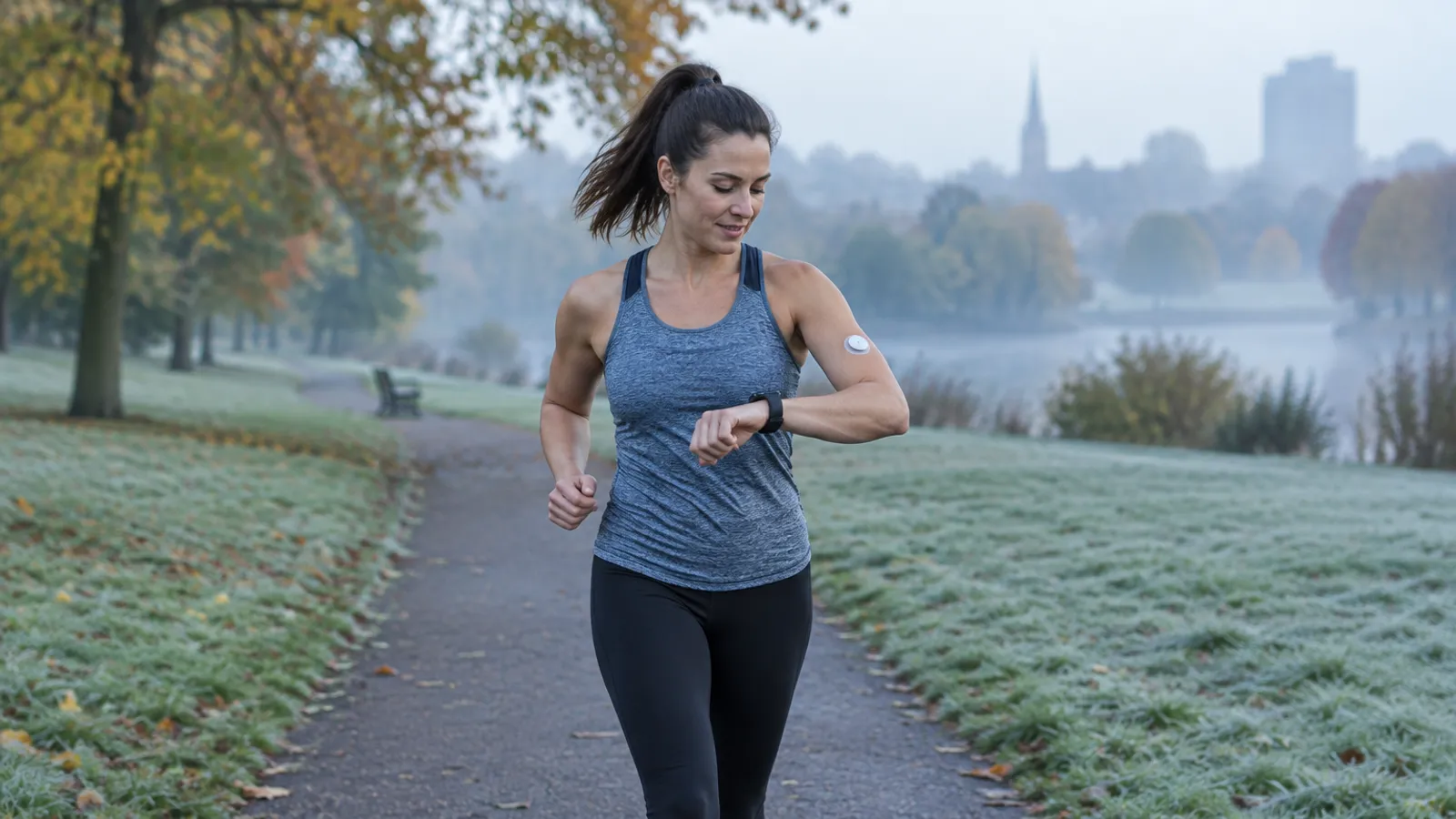
Step 2
While you are moving
Check your glucose every 20 to 30 minutes, and take some carbs as you go.
The harder you work, the more fuel your muscles burn. A gentle walk may need less carbohydrate, a run may need more.
The goal is to prevent a hypo and give your muscles enough fuel, not to treat a hypo once it happens.
The sprint trick. If your glucose is falling, a ten-second all-out sprint can help steady it. Your body releases stored glucose to fuel the effort.
It is not a hypo treatment. If you are already low, stop and treat it with fast carbs first.
Start here
30 g an hour
Split it up: about 10 g at the start, then 10 g every 20 minutes.
- Start10 g
- 20 min10 g
- 40 min10 g
This is a starting point, based on the evidence. Try it, watch your glucose, and adjust it to the patterns you see.
A step further
A more advanced version involves working it out from your weight. Start by taking 0.5 g of carbohydrate for every kilogram you weigh, every single hour. Split that hourly total into three equal parts as a snack every 20 minutes to keep your fuel steady without spiking your blood glucose.
35 g an hour, about 12 g every 20 minutes
Want to go even deeper? You can also work out carbs for your specific activity type and intensity.
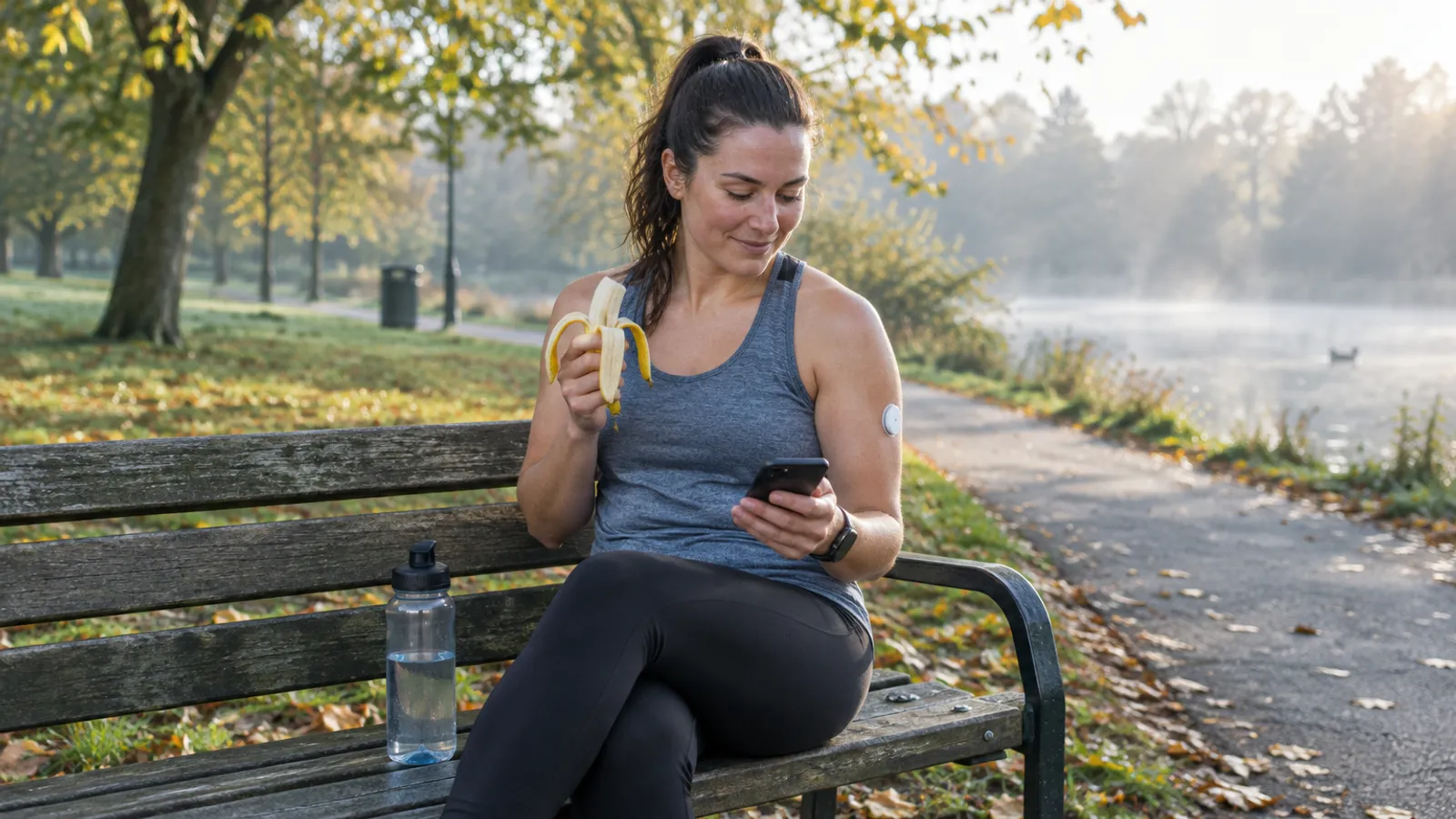
Step 3
Afterwards
Your body keeps refilling its glucose stores for up to a day and a half after exercise. That means a low can happen much later - including while you are asleep.
Eat carbs with your next meal. Do not skip it.
You may need less insulin with that meal, and less overnight. Your insulin afterwards, below, shows what to change for your type of insulin.
If you exercised in the late afternoon or evening before bed, check your glucose before going to sleep. A small snack can help prevent an overnight low.
Your insulin afterwards
A starting point to try with your diabetes team, not a fixed dose. You may need to trial it and adjust it to the patterns you see.
T25 after
Think T25 again: back to your usual Target, and about 25% less bolus with your next meal.
- Go back to your usual target as soon as you finish.
- Cut the bolus for your next meal by about a quarter to a third (25 to 33%). Your muscles stay sensitive to insulin for hours afterwards.
- Overnight, leave your settings as they are.
Based on the EASD/ISPAD position statement on automated insulin delivery and exercise (Diabetologia, 2025). Overnight advice from the EXTOD education programme.
You may need to reduce your insulin
If you are new to this type of exercise, or are not already making any changes to your insulin for it, start with:
- A 50% reduction (1/2 of what you would normally take) in the quick-acting (bolus) insulin taken for the first two meals after exercise.
- A 50% reduction (1/2 of what you would normally take) in any correction dosages taken for 12 hours after exercise.
And if you have exercised after 4 p.m. or if you have exercised for longer than two hours or done high-intensity exercise at any time of the day, you may also try starting with:
A 20% reduction (4/5 of what you would normally take) of your night-time background (basal) insulin. If on a pump then reduce basal rate by 20% for 6 hours from time of going to bed.
From the EXTOD Patient Day Handbook, version 5 (October 2019), page 33 and Figure 8.4.
Whichever way you take insulin, you may wish to set your low alarm a little higher overnight.
↑ Before you start: your insulin beforeFuel, safety and special cases
More detail, when you want it
You do not need these to get started. Open the one you need.
Fuel and foodWhat to eat, when, and how much.
- Ideally, have your meal and mealtime insulin at least 90 minutes before you exercise
- Fast carbs (glucose tablets, jelly babies, juice) work within minutes - use them during exercise or to treat a low
- Slower carbs (bread, pasta, porridge) release glucose over a longer time - better before a long session
- Too little and you run out of fuel; too much and your glucose climbs higher than you want
Staying safeWhen not to exercise, and what to carry.
- Do not exercise with raised ketones, chest pain, or if you feel unwell - seek medical advice
- Always carry fast carbs and a way to check your glucose
- Tell the people you are with that you have Type 1, and where your hypo treatment is
Special situationsPregnancy, diving, skiing, altitude and travel.
- These need a plan made with your diabetes team, not a general rule
- Cold and altitude can change how your sensor reads and how your body responds
- Long trips need extra supplies, a backup meter, and time-zone planning for your insulin
If the simple plan is not workingAdvanced options to try next.
- Change how much you reduce your mealtime insulin, in small steps
- Adjust your background insulin (injections) or temporary basal rate (pump) for the day of a big session. On hybrid closed loop, use your exercise or activity setting instead
- Keep a record over several sessions before making bigger changes - and share it with your team